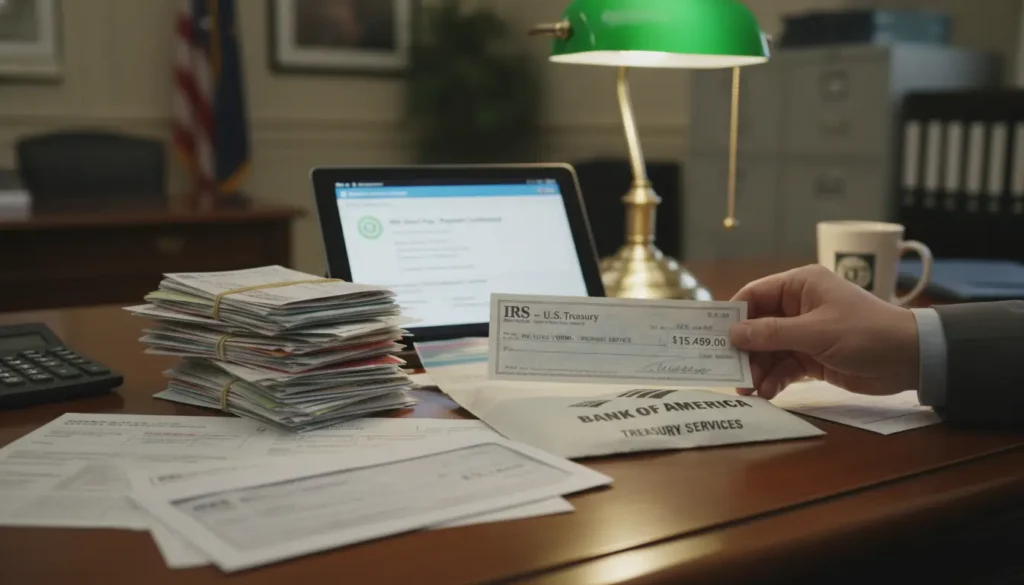
The IRS announced a new direct deposit distribution that begins in January 2026. This update explains who is likely to receive the $2,000 payment, how the funds are delivered, and clear steps you can take now to prepare.
$2,000 IRS Direct Deposit Update: What to expect in January 2026
The IRS plans to start sending payments by direct deposit in January 2026 to eligible recipients. Payments will appear in bank accounts linked to the taxpayer or recipient on file with the IRS or Social Security Administration.
Timing may vary by bank and by whether the IRS must verify eligibility. Expect multiple batches across January and February rather than a single date for everyone.
How the IRS will send the $2,000 direct deposit
The agency will use existing direct deposit rails used for tax refunds and benefit payments. Deposits will show as an IRS-related ACH credit on bank statements. Paper checks may follow for those without direct deposit on file.
- Direct deposit is fastest if your bank details are already with the IRS or SSA.
- Paper checks take longer and may be mailed if no account is available.
- Some recipients might see a confirmation notice or letter after the payment posts.
Who qualifies for the $2,000 IRS Direct Deposit payment
Eligibility is based on rules announced by Congress and guidance from the IRS. Basic qualifying criteria typically include income limits, filing status, and identification verification.
Common eligibility factors to watch:
- Adjusted gross income within specified limits for 2024 or 2025 tax filings.
- Citizenship or lawful residency requirements as defined by law.
- No outstanding identity-verification issues with the IRS.
Who may be excluded
Some people may not receive the payment, including those who owe certain federal debts or whose addresses cannot be verified. Nonfilers may need to submit a simple registration or rely on SSA records to receive funds.
Immediate steps to prepare for the payment
Take these practical actions now to speed receipt and avoid delays. Most steps are free and take only minutes.
- Confirm your direct deposit info: Check your most recent tax return or SSA profile for the bank routing and account number used by the IRS.
- File missing tax returns: If you haven’t filed recent returns, file as soon as possible so the IRS has current data.
- Verify your address and identity: Update the IRS using Form 8822 or contact SSA if you receive benefits.
- Monitor official IRS communications: Scams rise around payment announcements — rely on IRS.gov for accurate info.
How to check your direct deposit information
Log in to your IRS online account to review your bank account on file. If you receive Social Security or SSI, check your My Social Security account to confirm bank details there.
If you need to update banking details the IRS already used for a tax refund, consider filing a corrected tax return or contact the IRS for guidance; changes after a payment is processed cannot be applied retroactively.
What to do if a payment is delayed or missing
If the payment doesn’t arrive by end of February 2026, follow this checklist. Many issues can be resolved without long waits.
- Confirm eligibility and filing status for 2024–2025 tax years.
- Check bank statements and online IRS account for transaction details.
- Watch for IRS letters; the agency often mails notices explaining delays.
- If you suspect fraud, contact your bank immediately and report the issue to the IRS.
When to contact the IRS
Only contact the IRS after you’ve checked online tools and received any mailed notices. Phone wait times may be long during rollout periods, so prepare documentation (tax returns, ID info) before calling.
Tax-related direct deposits use the same ACH network as refunds and benefit payments, meaning the deposit will usually appear with an IRS or Treasury descriptor on your bank statement.
Real-world example: A small case study
Maria is a single parent who filed her 2024 taxes electronically and chose direct deposit for her refund. Her bank account was on file with the IRS, so when the $2,000 payment rolled out in January 2026, she saw the deposit clear within three business days.
Because Maria kept her address and filing history current, she avoided extra verification steps. She received an IRS notice two weeks after the deposit confirming the payment amount and source.
This example shows why keeping your tax and benefit records current speeds payment delivery and reduces follow-up work.
Common scams and how to avoid them
Announcements about large government payments attract fraud. Scammers may call, text, or email claiming you must verify personal details to get the $2,000 payment.
- The IRS will not call or text asking for bank account numbers or Social Security numbers.
- Do not click links in unsolicited messages; go directly to IRS.gov for official instructions.
- Report suspicious contacts at IRS.gov or to the Treasury Inspector General for Tax Administration (TIGTA).
Bottom line: Simple steps now can prevent delays
If you want the $2,000 IRS direct deposit in January 2026, check your filing and bank details now. Keep records current, monitor official IRS channels, and be cautious of scams.
Taking these small steps today reduces the chance of waiting for a paper check or resolving verification issues later.